
Installing an EV charger at home: cost, capacity and what to check
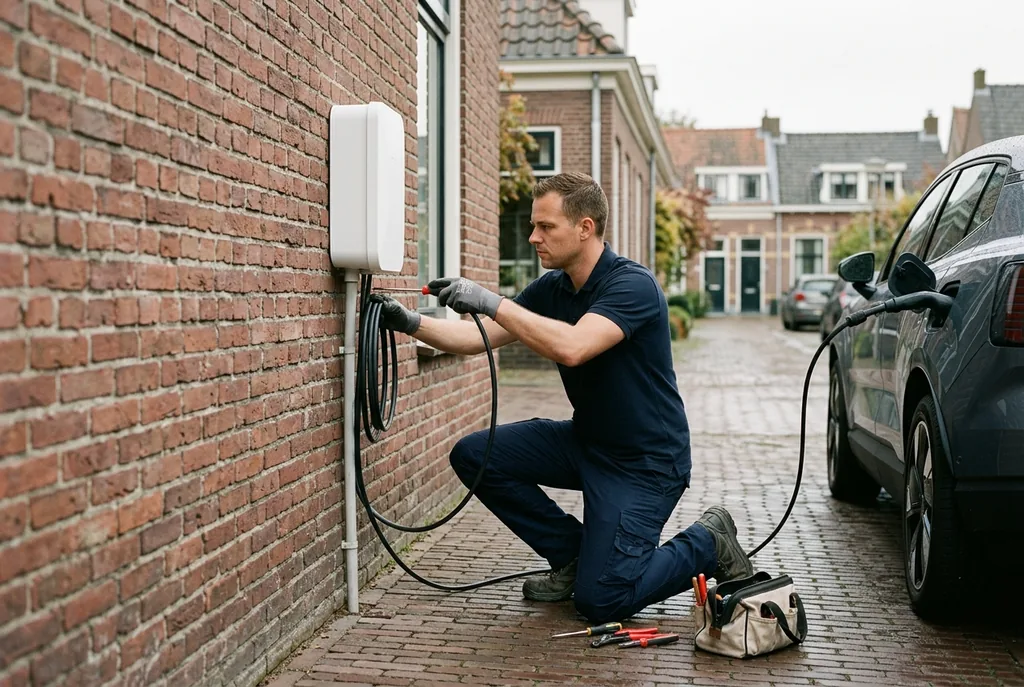
What drives the price
- The distance from the consumer unit to the parking space
- Whether the route is indoors or has to be dug across a driveway or garden
- The charger itself, and whether it needs load balancing
- Whether your supply has to be upgraded to three phase
The cable run is what most people underestimate. A charger on the wall next to the meter cupboard is a different job from one at the end of a garden.
How much power do you need?
An 11 kW three-phase charger fully charges most cars overnight. On a single-phase supply you are limited to about 3.7 kW, which is enough for daily commuting but slow for a large battery. Load balancing lets the charger reduce its draw when the rest of the house is busy, which often avoids an upgrade altogether.
The protection is not optional
An EV charger requires type B RCD protection, or type A combined with DC fault detection in the charger. This is because a car can produce a smooth DC residual current, which a standard type A device will not detect. It is the single most common shortcut in cheap installations, and it is precisely the one that matters.
Notifying the grid operator
Chargers above a certain rating must be registered with your grid operator, and an upgrade to three phase always requires an application. We handle both.
What to check in a quote
Check that the RCD type is specified, that the cable run length is stated rather than assumed, that any digging and reinstatement is included, and that the installation is certified on completion.
Frequently asked questions
Can I run a charger from my existing supply?
Often yes, at reduced power or with load balancing. We measure your actual consumption before recommending an upgrade.
Why is type B RCD protection needed?
An electric car can produce a smooth DC residual current. A standard type A device does not detect that, which leaves the installation unprotected in exactly the fault it is there to catch.
Can I charge from an ordinary socket?
Occasionally and slowly, yes. Not as a daily routine — a domestic socket and its wiring are not designed for hours at continuous full load.
Does a charger affect my insurance premium?
Not if it is professionally installed and certified. An uncertified installation can affect a claim, which is why the paperwork matters.