
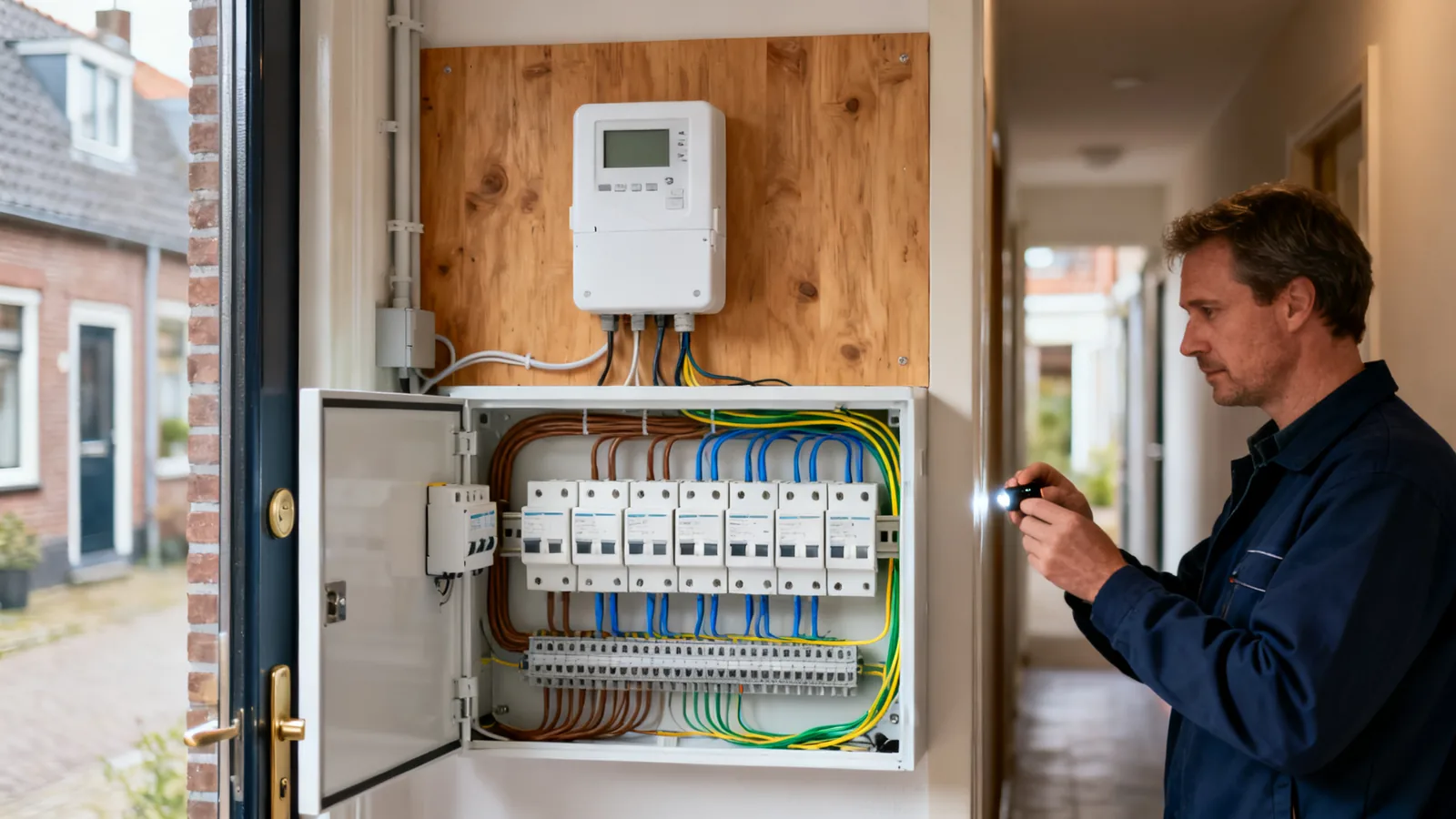
Electrical damage investigation
An electrical damage investigation establishes how electrical damage came about: what went wrong technically, and whether it happened in one moment or developed over a longer period. We record the facts, the cause and the assessment against NEN 1010, the Dutch wiring standard, in an independent report.
Report usually within about an hour of the inspection · with photos and NEN 1010 checks
Request an investigation
Independently recorded
We establish the facts and the technical cause. We do not judge who is liable: that is for the parties and their advisers, using our report.
View the sample report
What is an electrical damage investigation?
An electrical damage investigation is a technical examination of the cause of electrical damage, such as melting, fire or heat damage in the fuse box (in Dutch: groepenkast), at a junction box or at a connection. You need one when you find a defect shortly after buying a home, when your insurer asks for the cause, or when you are in a dispute with an installer.
The result is a written report that records the facts, the measurements, the technical cause and the assessment against NEN 1010 in a verifiable way, with a photo of every finding. You usually receive it within about an hour of the inspection.
- Facts and measurements
- Technical cause
- Long-term or one-off
- Checked against NEN 1010
- Repair advice
- Photo report
Found damage? Have the cause recorded first, and only repair after that.
Call 085 505 5457When do you need an electrical damage investigation?
Eight situations in which an independent report makes the difference.
Defect shortly after buying
Was the problem there before the transfer? We assess whether the damage fits a long-term process or a single event. Read about defects after buying a house →
Melting or fire damage in the fuse box
Charred wiring, melted plastic or soot: we establish where the heat developed and why.
Your insurer asks for the cause
A well-founded technical report makes the claim concrete and verifiable. Report for your insurer →
RCD that keeps tripping
Does the residual current device (aardlekschakelaar) keep switching off, or is there a burning smell? We look for the technical cause, not just the symptom.
Doubts about work carried out
Was the work done to standard, including extensions by a previous owner? We check against NEN 1010 and record any deviations.
Another report seems wrong
Disagree with the findings of another party? We give a second technical assessment. Electrical counter-expertise →
Damage after lightning or a surge
Appliances broken after a thunderstorm or a grid fault? We assess whether the damage fits an overvoltage and record it for the insurer.
Recurring fault in a rental home
For landlords and owners' associations (VvE): a well-founded report on where the cause lies and what needs to be done.
How do we establish the cause?
An electrical damage investigation is more than looking at where things turned black. We work from fact to conclusion, and every step can be traced in the report:
- Visual inspection of the fuse box, junction boxes, connections and connected appliances, including behind panels and hatches.
- Measurements, such as insulation resistance, loop impedance and the tripping current and time of the RCD.
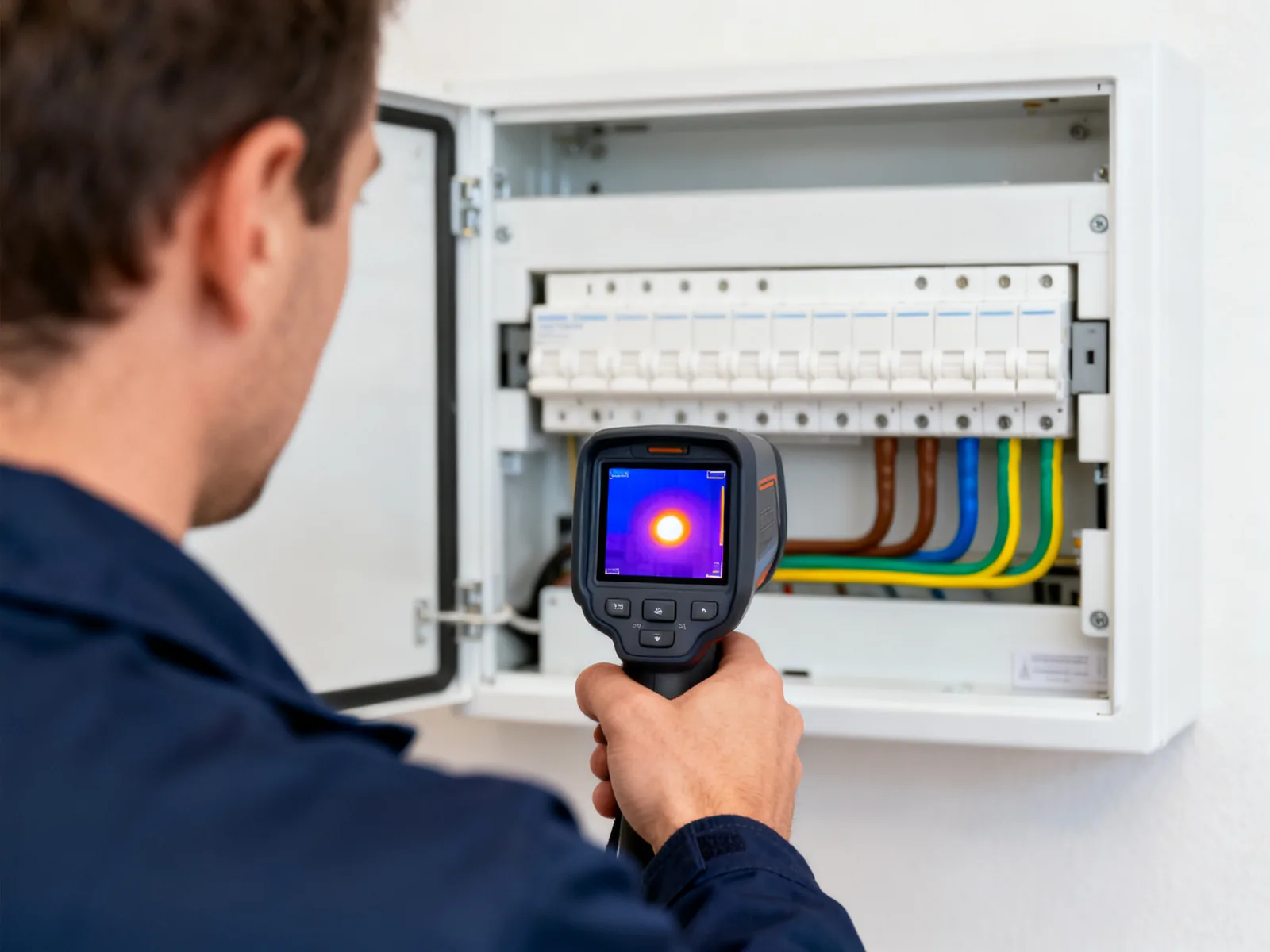
- Thermal imaging of parts that are still in use, to find hidden hotspots.
- Load analysis: which appliances are connected to which circuit, and how much power they draw.
- Comparison with failure mechanisms: does the damage fit a single event or a process over time?
- Photo report of every finding, with a caption.
What heat damage really looks like
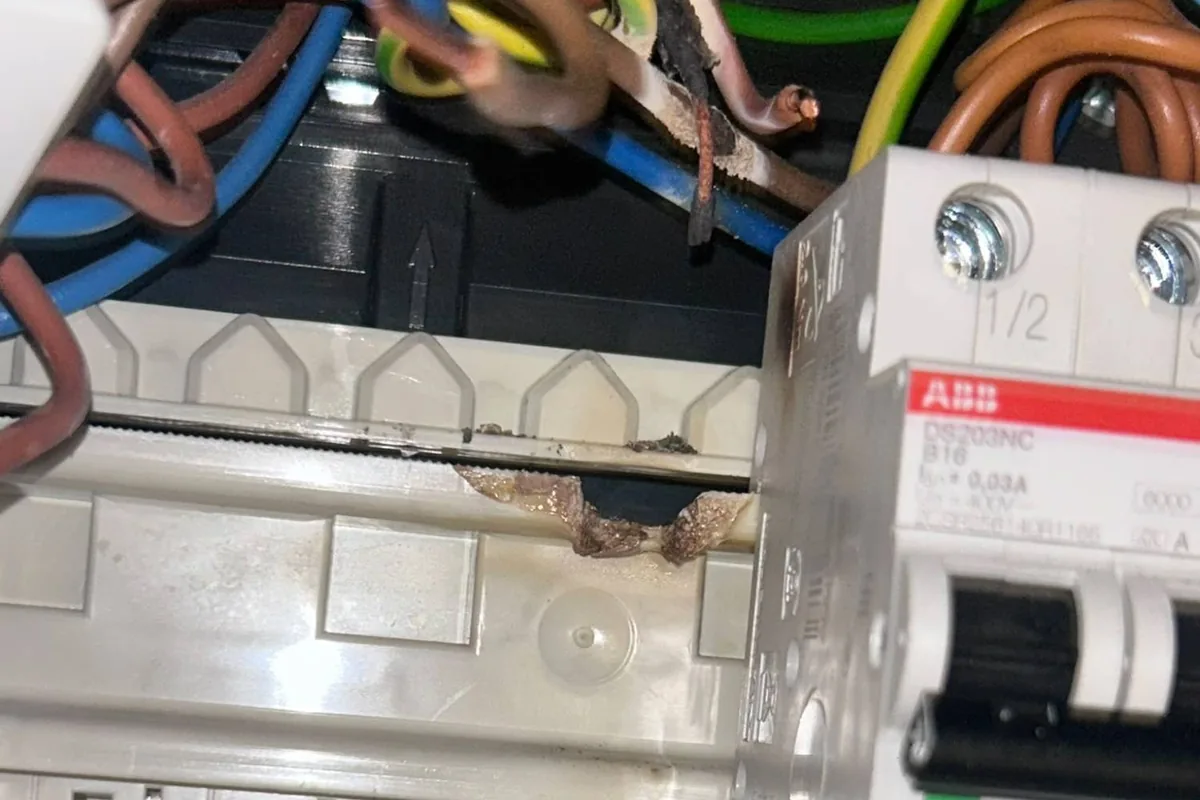
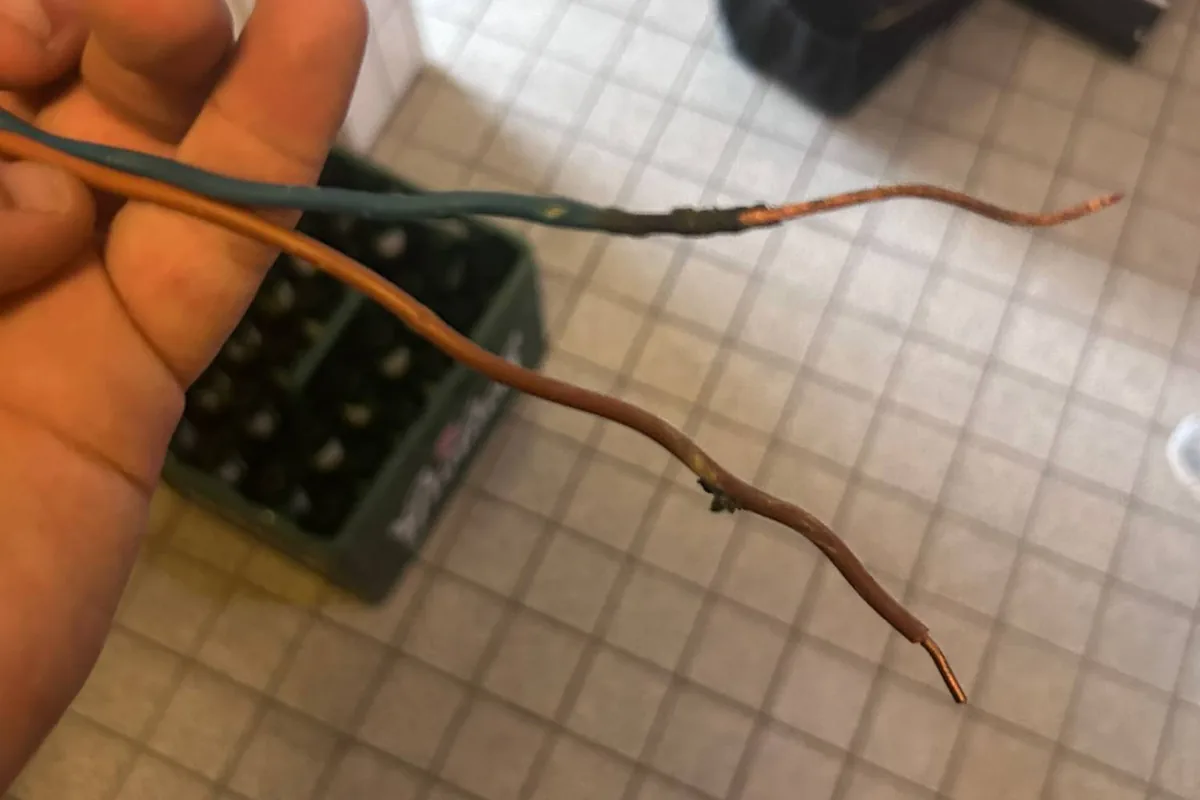
These photos come from one of our investigations. They show why an electrical damage investigation looks further than the spot where things went wrong:
- Melting damage to the connection rail: the plastic is deformed and discoloured. That does not happen in a single moment, but through heat building up around a connection again and again.
- Removed wire sections: the insulation of the neutral wire is charred along a length, and the live wire next to it has been affected by heat too.
We photograph and keep parts like these, so the findings can later be checked by any other expert. We never publish our clients' personal details or addresses.
A long-term process or a one-off event?
With a defect after buying a home, it almost always comes down to one question: did the problem exist before the transfer?
With electrical damage, that can often be substantiated technically, because the most common damage develops gradually. This is how heat damage in a connection develops:
- Every live connection has a small contact resistance. The heat produced there increases with the square of the current: twice the current means four times the heat.
- Repeated heating and cooling makes the materials expand and contract. A terminal can work loose over time, so the contact resistance rises. NEN 1010 names temperature changes and ageing as causes of connections working loose (guidance to clause 526.1).
- More resistance means more heat, and more heat makes the connection worse. The process reinforces itself.
- It ends in charred insulation, melting damage to the surrounding plastic and possibly arcing.
Why did the circuit not switch off earlier?
A circuit breaker responds to excessive current, an RCD to leakage current to earth. Neither notices a connection that is slowly getting worse. Moreover, under the product standard NEN-EN 60898-1, a 16 A breaker does not trip within an hour at about 18 A. The absence of earlier faults therefore says little about how long the problem had existed.
| What the damage shows | Long-term process | One-off event |
|---|---|---|
| Charred insulation along a length | Usually fits | Rarely fits |
| Damage to adjacent wires | Usually fits | Rarely fits |
| Melting with soot around a connection | Usually fits | Rarely fits |
| Deformed terminal housing, undisturbed dust | Usually fits | Rarely fits |
| Breaker trips, no traces of heat | Rarely fits | Usually fits |
To be fair: the exact moment such a process starts cannot be determined with certainty afterwards. What we can substantiate is whether the damage fits weeks, months or longer, and that reasoning is set out in full in the report.
See what a report looks like
Our sample report follows a fictional case from first call to NEN 1010 assessment, in exactly the layout of our real reports.
View the sample reportWhat is in the report?
The report of an electrical damage investigation is written for two readers at once: for you, and for the party who has to assess it, such as a seller, insurer, lawyer or expert. That is why it is set up as a technical file:
- In brief: the conclusions on one page.
- Factual findings: what was observed, without interpretation.
- Measurements: the result and assessment of each measurement.
- Technical cause: the mechanism, explained step by step.
- Long-term or one-off: our assessment, with reasoning.
- Grounds for rejection: the NEN 1010 clause for each finding.
- Repair advice and a photo report of every finding.
The report is written in Dutch, because it is usually read by a Dutch seller, insurer or lawyer. We explain the findings to you in English, and any follow-up questions are answered in a technical supplement that forms part of the report.
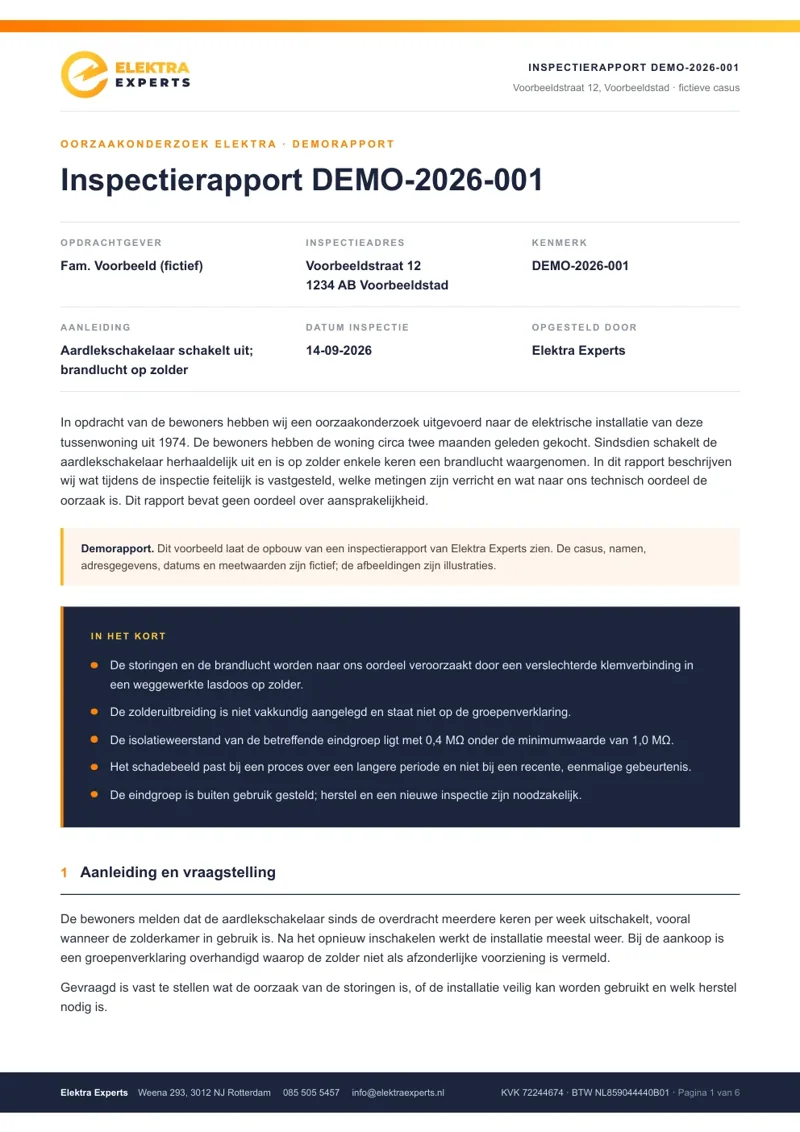
From first call to cause: a fictional case
How an investigation runs, based on the case in our sample report.
The call
Two months after buying a 1974 house, the RCD keeps switching off, especially when the attic room is in use. Now and then the attic smells of burning.
Read the caseWhat we found
Behind a painted-over ceiling panel: a junction box with a melted push-in connector, 1.5 mm² wire on a 20 A breaker and an insulation resistance of 0.4 MΩ.
Request an investigationThe conclusion
A deteriorated terminal connection as the cause, damage that fits a longer period, and six points of rejection with the matching NEN 1010 clause.
See the findingsFictional case for illustration: names, address and measurements are invented, and the images in the sample report are illustrations.
Why an independent report works
Facts and technology
We describe what we found and what the technical cause is. No taking sides, no assumptions.
No judgement on blame
Who pays for the damage is for the parties and their lawyers to decide. Our report gives them the technical basis.
Verifiable
Every conclusion refers to a finding, a measurement, a photo or a NEN clause. Another expert can check it.
Repair is separate
You can have us carry out the repair, but you do not have to. The report is not tied to an order.
How an electrical damage investigation runs
- 1
Request
Call us or fill in the form. We discuss your question, who the other parties are and whether there is any immediate danger. You receive a price in advance.
- 2
On-site inspection
Visual inspection, measurements and photo report. If there is immediate danger, we make the installation safe and record that.
- 3
Report
You receive the report with facts, measurements, cause, NEN 1010 assessment and repair advice, usually within about an hour of the inspection.
- 4
Explanation and supplement
We talk you through the report in English. Follow-up questions are answered in a technical supplement.

Who carries out the investigation?
Every electrical damage investigation is carried out by Elektra Experts, a NEN 3140 and VCA certified installation company with more than 8 years of experience in homes and commercial buildings across the Netherlands. The investigation and the report are handled by our inspector Alex N., who holds all the required qualifications.
- NEN 3140 certified
- VCA certified
- Recognised training company
- 8+ years of experience
- Fully insured and recognised
- Report separate from repair
Frequently asked questions about an electrical damage investigation
How much does an electrical damage investigation cost?
The price is on request. Every investigation is different: the size of the installation, the number of measurements and the type of report determine the cost. That is why you always receive a price in advance, so you know where you stand.
How quickly do I receive the report?
Usually within about an hour of completing the inspection. If your situation calls for more extensive measurements or further investigation, we tell you in advance how long it will take.
Is the report in English?
The report is written in Dutch, because it is usually read by a Dutch seller, insurer or lawyer. We explain the findings to you in English. If you also need the report itself in English, mention it when you book and we will tell you what is possible.
Can it be established afterwards how long a defect existed?
The exact start cannot be determined with certainty afterwards. We can, however, assess whether the damage fits a single event or a process over weeks, months or longer. Charred insulation along a length, damage to adjacent wires and melting with soot usually point to long-term heat development.
Why did the circuit not switch off earlier?
A circuit breaker responds to excessive current and an RCD to leakage current to earth. Neither detects a connection that slowly heats up. Under NEN-EN 60898-1, a 16 A breaker also does not trip within an hour at around 18 A.
Can I use the report with the seller or my insurer?
Yes. The report records the facts and the technical cause in a verifiable way. Who is liable is for the parties and their advisers to decide; our report provides the technical basis.
Should I leave the damage as it is until the investigation?
Yes, if it is safe: do not repair or clean anything before the situation has been recorded, because that removes evidence. If you smell burning, see sparks or something gets hot, switch off the circuit or the main switch and call our 24/7 emergency service straight away. We record the situation before making the installation safe.
Do you also carry out the repair?
We can, but you do not have to use us. The report is separate from the repair: you can have it done by us or by another recognised installer. If you need a new fuse box, read more about fuse box replacement.
Have the cause recorded independently
Tell us briefly what happened and when you discovered it. We will contact you to discuss your question, the price and the planning. Immediate danger? Call 085 505 5457 (from abroad: +31 85 505 5457).
Recognised installation company
Recognised installation company
Request an investigation
Related reports
Defect after buying a house
For buyers
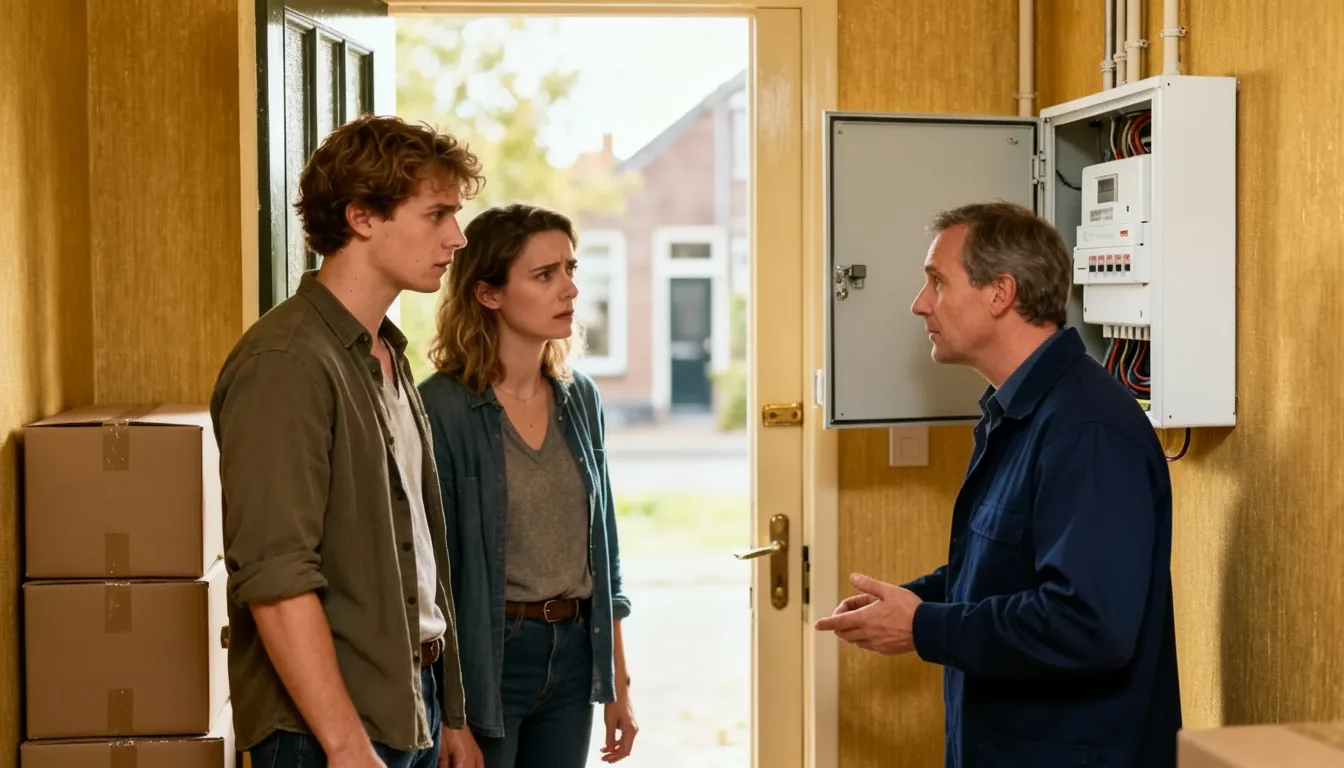
Technical evidence in a dispute with the seller: did the defect exist before the transfer?
More InformationReport for your insurer
Insurance claim
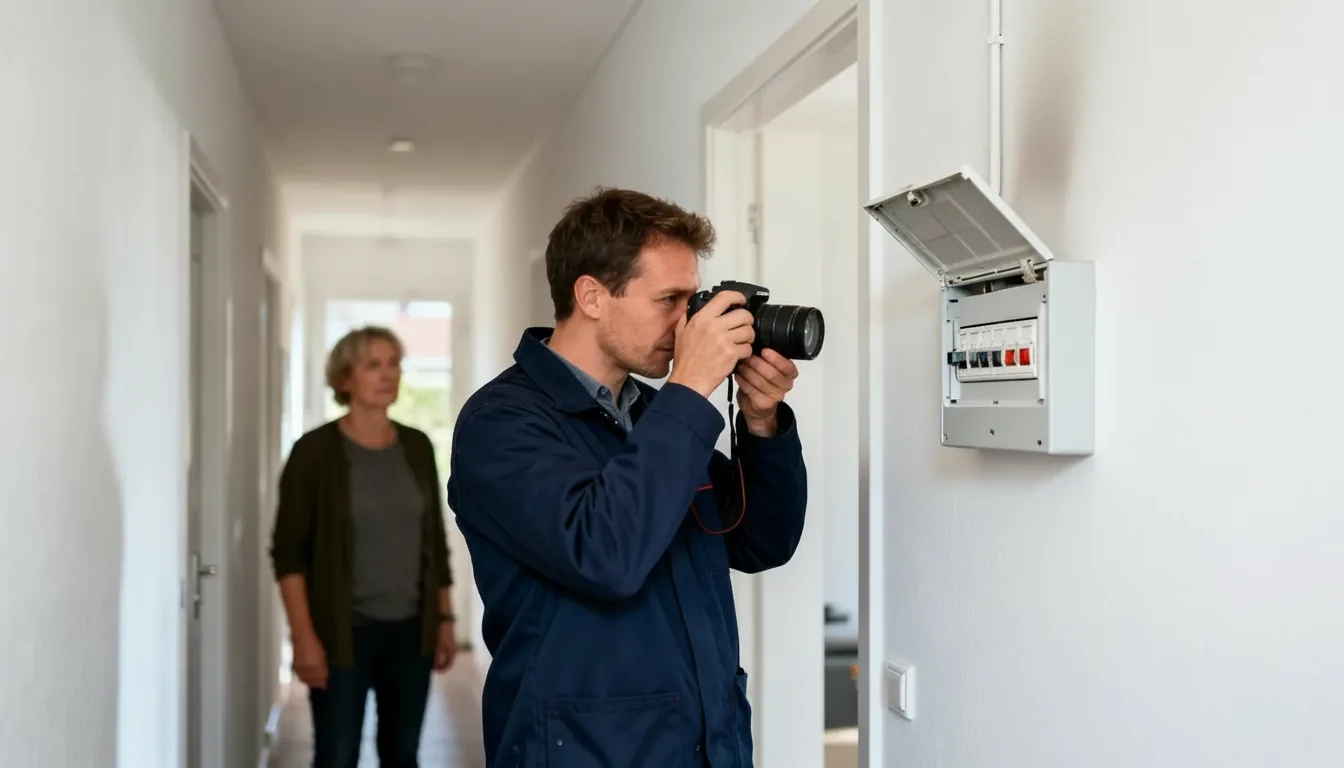
A well-founded technical cause, so your insurer can assess the damage properly.
More InformationElectrical counter-expertise
Second opinion
A second, independent assessment of another party's report.
More InformationUnsure about the cause of the damage?
Call us for a no-obligation conversation about your situation. We will tell you honestly whether an investigation makes sense, and what it will give you.
Call 085 505 5457